
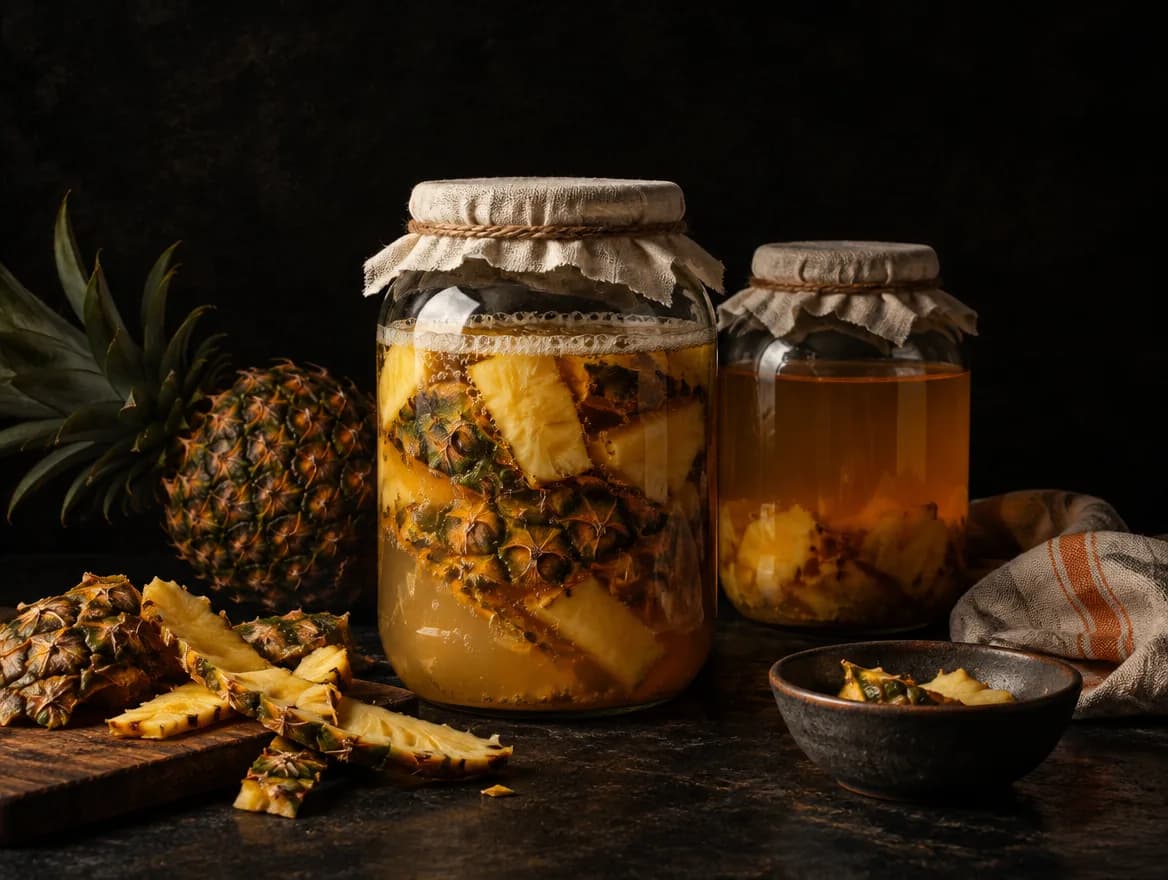
The earlier source contains a complete tepache recipe: the rind and core of one medium pineapple, 8 cups water, 1 cup piloncillo or packed dark brown sugar, 1 cinnamon stick and 4 cloves. Later family conversations used maple syrup and refreshed an ongoing ferment, without preserving a standardized ratio for that version.
The recipe below restores the written base. It does not establish a predictable alcohol percentage, a validated shelf life, or canning-strength vinegar. Refrigeration slows fermentation; it does not make a wild ferment alcohol-free or prove that it is safe.
Ingredients
One small fermenting batch; strained volume varies with the fruitCheck off each item as you go.
Method
Prepare the fruit and vessel
Wash the pineapple exterior and use clean food-contact tools. Keep the rind and core, cut to fit a clean vessel of about one gallon; the earlier half-gallon suggestion was too small for 8 cups water plus fruit.
Dissolve the sugar
Warm 2 cups of the measured water just enough to dissolve the sugar. Cool it before combining with the fruit; the remaining 6 cups are added cold.
Combine and submerge
Add pineapple, cinnamon, cloves and the measured sugar-water mixture. Use a clean fermentation weight to keep fruit below the liquid, leaving headspace.
Cover and observe
Use a clean breathable cover or suitable vented fermentation closure, away from direct sun. The written source described roughly 3 to 5 days, depending on conditions. This is an observation window, not a validated safety deadline.
Strain and chill
Strain when the ferment reaches the intended flavor, then refrigerate promptly and use fresh. Do not taste anything with mold, unusual growth, a rotten odor or suspected spoilage. Flavor and bubbling alone are not safety tests.
Keep the vinegar trial separate
Do not assume that leaving tepache longer produces standardized vinegar. Homemade acidity is unknown; do not substitute this experiment for vinegar of a specified acidity in a tested canning recipe. Do not bottle-condition under pressure using the unmeasured household method.
Safety & handling
- Wild fermentation can produce alcohol. This record does not establish an alcohol-free drink.
- Discard moldy or spoiled material; do not rely on a pleasant smell to prove microbial safety.
- Do not use this homemade vinegar experiment for home canning or a shelf-stable preservation process.
- Do not add uncontrolled pressure fermentation to this recovered recipe.
Insider tips
- Write the starting ingredient weights, room temperature and dates on the jar.
- Compare the written sugar base with any later maple trial as separate batches rather than changing several variables in one continuing jar.
- Keep the fruit submerged and leave enough vessel capacity for the fruit, liquid and headspace.
Family notes
- The family discussed maple syrup as the sweetener and later kept or refreshed a continuing pineapple ferment.
- Those later ratios and the resulting alcohol/acidity were not measured in the recovered source.
- The original prose incorrectly suggested fixed low alcohol, guaranteed vinegar conversion and refrigeration stopping fermentation. Those assurances have not been retained.
Sources & what was completed
Record provenanceReviewed against original conversation text and attachments on September 27, 2026. Recorded family outcomes, original assistant proposals, and current editorial completion are distinguished below.
Completed for usability- All five base quantities were recovered from the ordinary text of "Pineapple rind fermentation and uses," not invented.
- Vessel capacity and fermentation/safety wording were corrected for usability; the entire corrected procedure is not claimed as family-tested.
- Maple substitution and the continuing-vinegar experiment retain their unresolved measurements.
Recorded by Reviewed source recovery on Sep 27, 2026.