
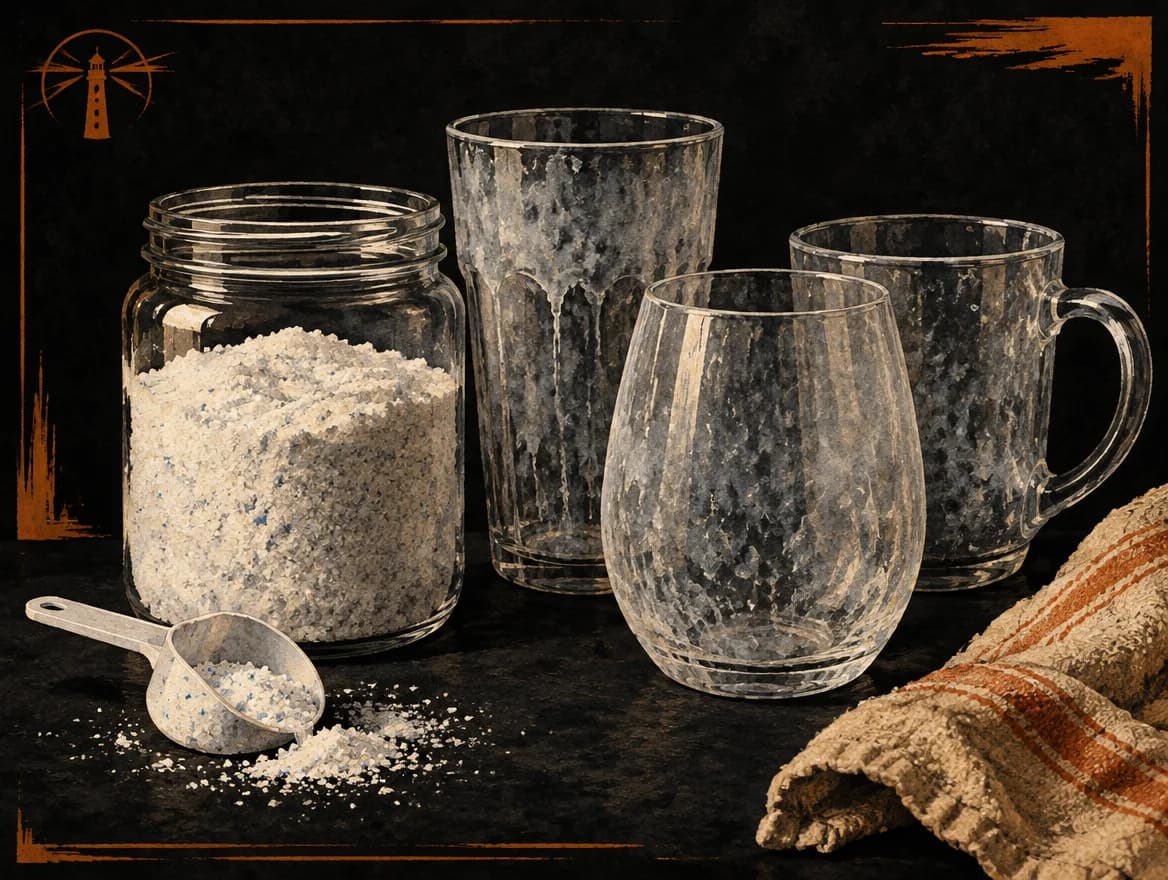
Status: incomplete recovery formula. The listed mixture is the best reconstruction of the earlier written recipe associated with a successful family report, but Heather later questioned which ingredients she had actually used. Make a small, carefully labeled batch and record the results before adopting it. Use 1 tablespoon for the first test load; increase only if needed. Do not combine detergent with vinegar or another acid during the wash phase. For rinsing, use the dishwasher manufacturer's approved rinse aid; use white vinegar only if the appliance manual permits it. Do not put lemon juice in the rinse-aid reservoir because pulp and sugars may clog or spoil in the dispenser.
Ingredients
Approximately 3 1/4 cups; previously described as about 30–40 loadsCheck off each item as you go.
Recorded process
Historical steps only. Missing quantities must be resolved before this can be a repeatable formula.
Prepare dry equipment
Make sure the bowl, utensils, jar, and ingredients are completely dry.
Combine the base
Gently mix the washing soda, borax, citric acid, and non-iodized salt without creating airborne dust.
Add the oxygen cleaner
Mix in the sodium percarbonate, or keep it in a separate labeled container so it can be added fresh per load.
Store
Transfer immediately to a tightly sealed, moisture-resistant container. Label it as an unconfirmed recovery batch and keep it away from children and pets.
Test and use
Start with 1 tablespoon in the detergent compartment for one ordinary load. If dishes rinse clear but remain dirty, test up to 2 tablespoons. Record the dose, water conditions, cycle, and outcome before changing the formula.
Handle rinse aid separately
Use an appliance-approved rinse aid. If the dishwasher manufacturer allows white vinegar, place it only in the designated rinse stage or an open cup on the upper rack; never mix it directly into the detergent powder.
Troubleshooting
- White chalky film after washing may be mineral residue from hard water or an overly alkaline detergent. Reduce the detergent dose first and confirm that citric acid was not omitted.
- To test recent mineral film, soak one affected glass in warm citric-acid solution or vinegar. If the cloudiness clears, it was removable residue; haze that remains unchanged may be permanent etching.
- For a dishwasher-wide mineral cleanup, the family was previously advised to run affected glasses without detergent using 3–4 tablespoons of citric acid on the hottest suitable cycle. This recovery method was suggested but no family result was recorded.
- If the powder clumps, discard any damp or actively reacting portion and remake it with dry tools; consider storing the citric acid separately.
- If film continues after lowering the dose, test a revision without borax rather than changing several ingredients at once.
- If cleaning is weak but dishes rinse clear, increase from 1 tablespoon toward 2 tablespoons or dose dry sodium percarbonate separately.
Insider tips
- Test a small batch before producing a full jar because the exact successful family mixture is uncertain.
- Moisture can make citric acid and washing soda react and harden the blend. Separate storage and per-load dosing are more reliable in humid conditions.
- If storing sodium percarbonate separately, add it only when loading the dishwasher and keep its container tightly closed.
- Do not use fresh lemon juice in the rinse-aid reservoir; its pulp and sugars can foul the dispenser.
- Avoid using this alkaline detergent on aluminum, hand-painted dishes, delicate finishes, or other items excluded by the dishwasher or item manufacturer.
Family notes
- Heather reported that an early dry dishwasher mixture left the dishes spotless and sparkling.
- When citric acid and sodium percarbonate were unavailable, a temporary washing-soda/baking-soda/salt mixture was proposed.
- After returning home, Heather observed that dishes washed with the temporary or otherwise altered mixture were covered in white residue.
- Heather believed the failed batch omitted citric acid and sodium percarbonate, but she was unsure whether its other ingredients were baking soda, washing soda, borax, or some combination.
- No later family report confirms that the reconstructed formula or the proposed hard-water revision solved the problem.
Background & original notes
Status: incomplete recovery formula. The listed mixture is the best reconstruction of the earlier written recipe associated with a successful family report, but Heather later questioned which ingredients she had actually used. Make a small, carefully labeled batch and record the results before adopting it. Use 1 tablespoon for the first test load; increase only if needed. Do not combine detergent with vinegar or another acid during the wash phase. For rinsing, use the dishwasher manufacturer's approved rinse aid; use white vinegar only if the appliance manual permits it. Do not put lemon juice in the rinse-aid reservoir because pulp and sugars may clog or spoil in the dispenser.
Sources & what was completed
Record provenanceWilliams family historical source + clearly separated usability completion
Completed for usability- The ingredient list reconstructs the earlier written recipe linked to the family success report; it is not confirmed as the exact mixture Heather made.
- Numbered preparation, storage, dosing, and test instructions were completed for usability and have not been family-tested as a full procedure.
- The appliance-approved rinse-aid caution and labeled test-batch protocol are editorial safety completions, not family-tested findings.
- This record must remain incomplete until Heather makes a documented batch and confirms the exact ingredients, dose, water conditions, and outcome.
Recorded by Williams family record + completion on Sep 26, 2026.