
A growing journal built from dated family observations. The latest report below is historical evidence, not a claim that the plant is in the same condition today. Plans and questions are kept separate from actions and outcomes.
Latest recorded state
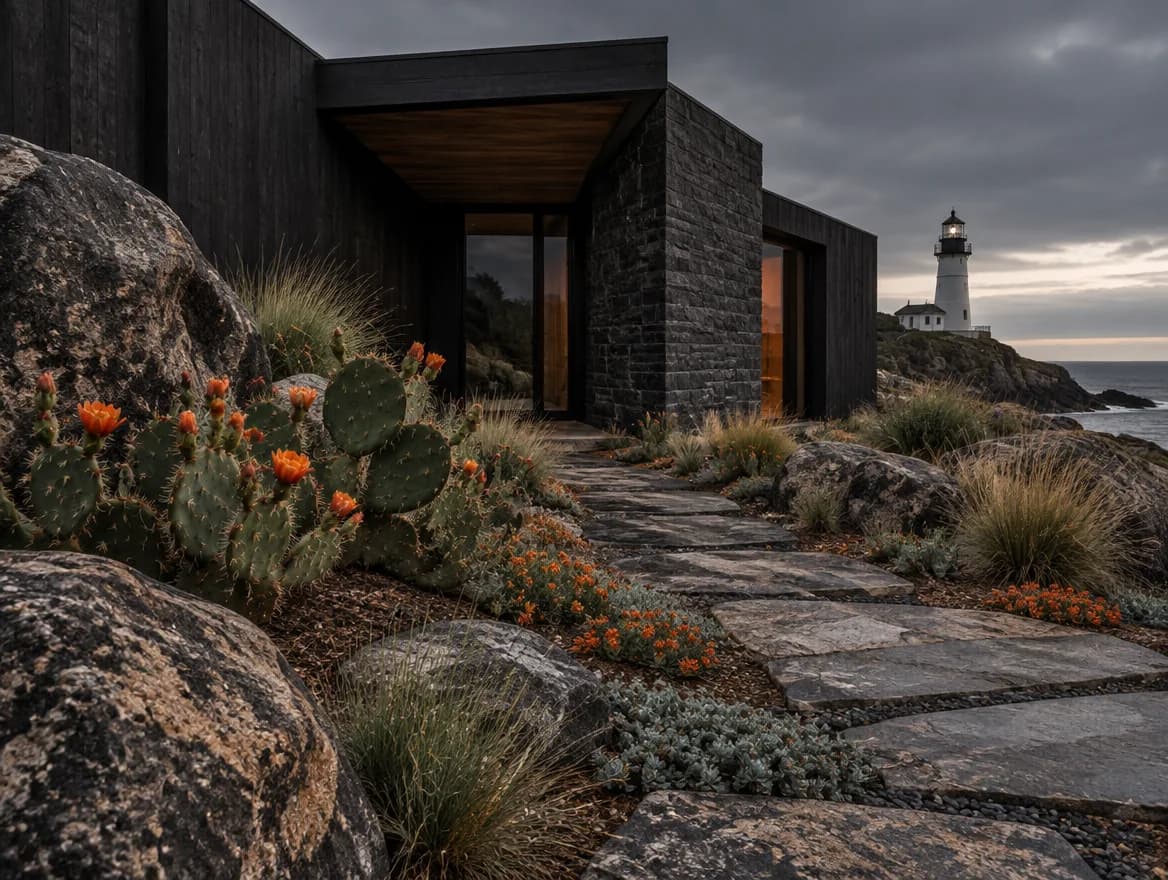
- The May entrance planting included native grass, plants called "chicks," unidentified succulents, and prickly pear moved from the property's hill.
- July 18: purslane already grew in rocky areas, and ducks liked lying on it. No permanent replacement cover was confirmed.
- The June ground-cover search favored seed-grown, weed-suppressing plants for rocky Zone 4 mounds, without weed killer.
What we learned
- Keep confirmed plantings separate from species suggested during the search.
- The transplanted grass still had green inner growth at its early check; dried outer leaves did not settle the survival question.
- A green cover observed in summer is not proof of a persistent winter ground cover.
The story so far
Dated observations, not assumptions about today.
Large rocks and real planting+
The household moved large rocks to the property entrance. Heather planted tall native grass, "chicks," other succulents and relocated prickly pear among them. Other species and establishment were not confirmed.
Drying grass and a new lupine+
The tall grass was drying while inner parts still looked green. Straw had been placed at its base. A gallon-size lupine was planted; whether straw was added to it and how it fared were not recorded.
Irish moss changed color+
Purchased Irish moss for the rocky area yellowed after heavy rain. Timing after rain was an observation, not proof of the cause.
A seed-grown ground-cover search+
Heather wanted weeds suppressed among rocks and tall grass without herbicide, initially favoring white flowers and evergreen foliage. No species or seed purchase was confirmed.
Purslane was already growing+
Purslane covered some rocky areas and the ducks rested on it. Transplanting it or sowing creeping thyme were questions; no such action was reported.
Next steps & open questions
- Map which plants are actually present around each rock cluster.
- Record sun, moisture and survival before choosing the next seeded trial.
- Keep the no-herbicide goal and confirm any species before buying or planting.
Sources & what was completed
Record provenanceDated Heather growing observations, source sequences 225, 235, 240, 285, 310. Restored September 27, 2026 after unrelated garden records were inadvertently archived.
- Restored growing notes from Heather's archived conversations. No medicinal-use instructions or unsupported plant diagnoses are included.
Recorded by Reviewed source recovery on Sep 27, 2026.