
FAILED FAMILY-TESTED VERSION
Ingredients
Approximately 16 fl oz, divided into two 8 fl oz bottlesCheck off each item as you go.
Method
Combine the failed base
The original instructions called for gently combining the castile soap, distilled water, vegetable glycerin, fractionated coconut oil, vitamin E oil, and aloe vera gel without vigorous shaking.
Divide the batch
Split the approximately 16-ounce base between two 8-ounce bottles.
Leave one portion unscented
The intended Leo portion was to remain fragrance-free. There is no recorded family test of that separate unscented portion.
Scent the men’s portion
The original plan was to stir the cedarwood, sandalwood or amyris, frankincense, sweet orange, and optional spice oils gently into Kriss’s 8-ounce portion. The exact oils actually used were not recorded.
Family test
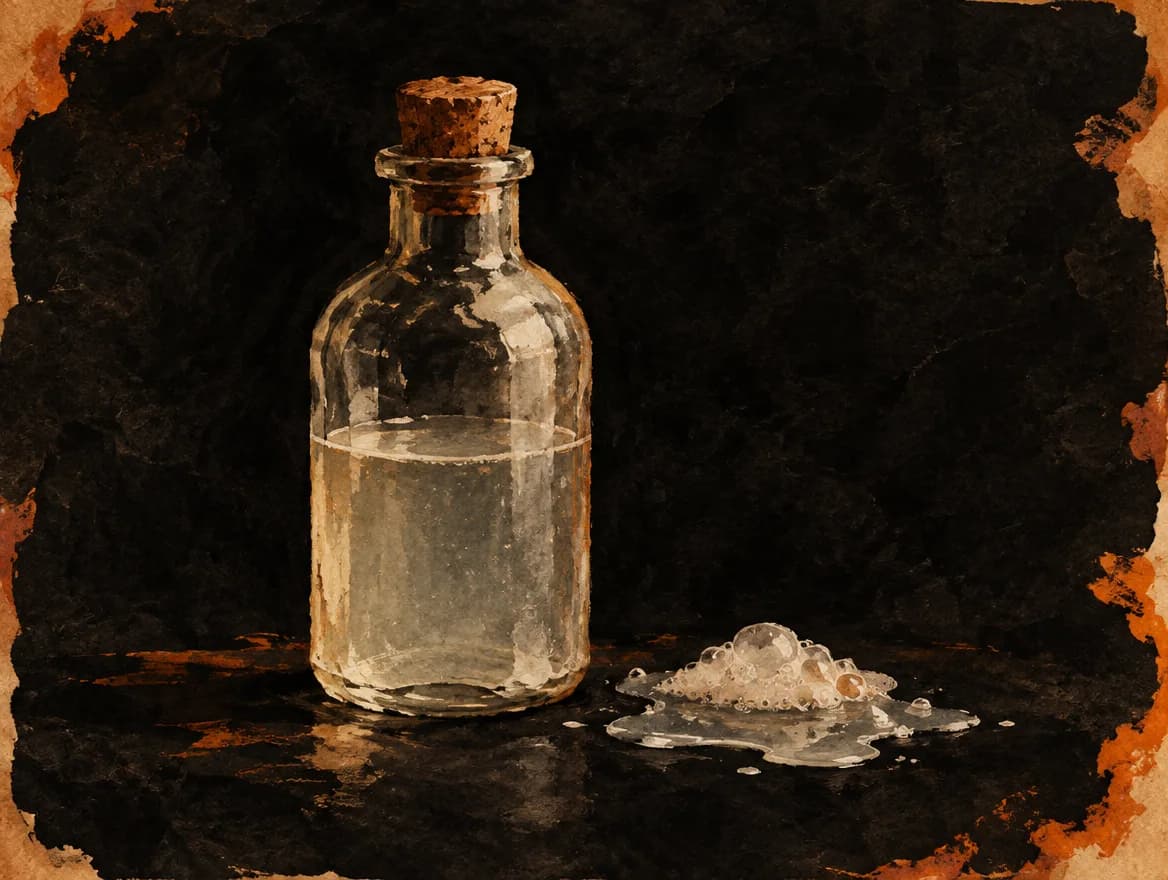
The scented body wash was tried in the shower. It was far too watery, produced almost no lather, and felt rubbery or sticky.
Troubleshooting
- Observed problem: extremely thin, watery consistency.
- Observed problem: almost no lather.
- Observed problem: rubbery or sticky feel during or after washing.
- Possible contributor: fractionated coconut oil exceeded what the soap system could keep dispersed and suppressed foam.
- Possible contributor: hard water reacted with castile soap; the water actually used was not documented.
- Possible contributor: aloe gel or one of its additives destabilized the mixture.
- The historical suggestion to add another 1/4–1/2 cup distilled water and more glycerin was not family-tested and would make an already watery product thinner.
- The historical suggestion to add xanthan gum was not family-tested; xanthan may clump, feel stringy, or fail to correct the underlying incompatibility.
- Do not add citric acid to lower the pH of true castile soap; this can break the soap and worsen curding, separation, and lather.
- Discard the batch if it develops an off odor, gas, visible growth, or an unexplained change in color or texture.
Insider tips
- Use distilled water for experimental soap dilutions because hard-water calcium and magnesium can form waxy, poorly lathering soap scum.
- Added free oils commonly reduce foam in castile-based washes.
- A pump or foaming dispenser may make a naturally thin wash easier to dispense, but it will not correct incompatibility, preservation, or sticky-feel problems.
- Do not assume that a product is suitable for allergy-prone skin merely because its ingredients are described as natural; fragrance and essential oils can also cause reactions.
- Any future water-containing body wash needs a compatible broad-spectrum preservative and validated pH, stability, and microbial safety.
Family notes
- Kriss prefers warm sandalwood-style men’s fragrances.
- Leo has significant allergies and the intended plan was to keep his portion unscented.
- Heather tested the men’s wash and described it as way too watery, with almost no lather and a rubbery or sticky feel.
- Heather noticed some dryness, especially on her hands, but had also been handling soap throughout the day, so the cause was not isolated.
Background & original notes
FAILED FAMILY-TESTED VERSION
The base was designed as a 16-ounce batch divided into two 8-ounce bottles: one unscented and one scented with a warm, woody essential-oil blend. The finished wash was tested in the shower and was reported to be extremely watery, produce almost no lather, and leave a rubbery or sticky sensation. Some dryness was also noticed, although the dry hands may have been partly caused by making and handling soap throughout the day.
Use/dosage
No successful dosage was established. The batch was used as a shower body wash but did not perform acceptably. Do not remake this version as written.
Important formulation notes
Adding water and aloe to liquid castile soap creates a preservation concern and can further reduce viscosity and lather. Vitamin E is an antioxidant, not a broad-spectrum preservative. Added coconut oil can suppress foam and contribute to an oily, sticky, or separated texture. Hard-water minerals can also react with true soap and create insoluble soap scum with a waxy or rubbery feel.
Do not try to lower castile soap’s pH with citric acid. Acid can convert part of the soap back into fatty acids, causing curds, separation, reduced cleaning, and reduced lather. A future skin-friendly revision should use a properly formulated surfactant system, suitable thickener, and broad-spectrum preservative rather than trying to turn diluted castile soap into a commercial-style body wash.
Sources & what was completed
Record provenanceWilliams family historical source
Completed for usability- No replacement formula has been family-tested or added to this record.
- Preservation and acidification cautions were added for usability and safety; they were not part of the family trial.
- A future revision should be developed as a properly preserved, pH-appropriate surfactant body wash and clearly labeled untested until family results are recorded.
Recorded by Williams family record on Sep 26, 2026.