
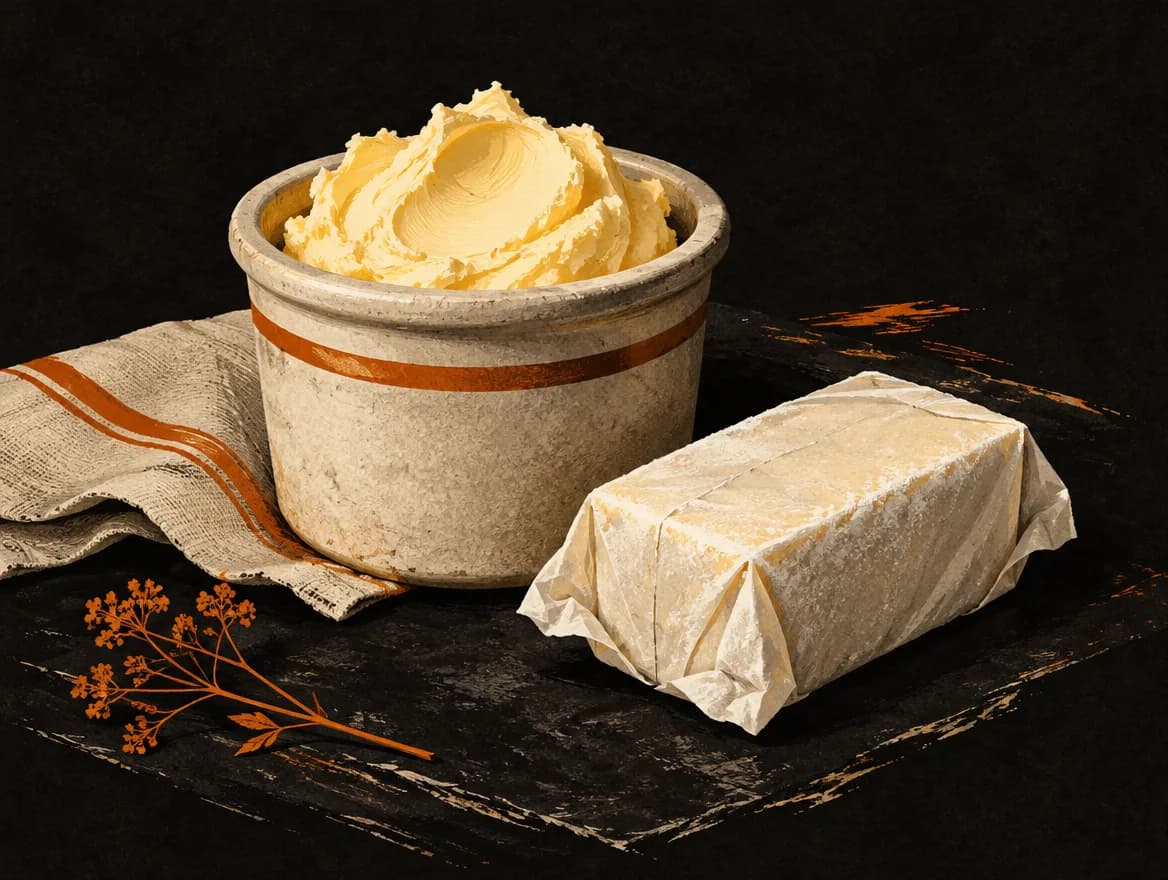
This usable method completes the missing quantities and steps around the family-recorded combination of heavy cream and organic plain yogurt culture. Culture the cream until pleasantly tangy, chill, churn, wash, and work the butter before packaging it tightly. Freeze portions that will not be used promptly. The completed method is a standard kitchen method and is not represented as a Williams-family-tested formula.
Cultured butter may also be melted, browned, or clarified. Clarifying removes its water and milk solids, but it should not be relied upon as a preservation method for cream cheese.
Ingredients
About 12–16 ounces butter, depending on the creamCheck off each item as you go.
Method
Culture the cream
Place the cream and yogurt in a clean, nonreactive container and stir thoroughly with a clean utensil. Cover and leave at a moderate room temperature until thickened and pleasantly tangy, typically 12–24 hours. Fermentation time varies with temperature and culture activity; do not use elapsed time alone to judge acceptability.
Chill
Refrigerate the cultured cream until thoroughly cold, preferably several hours or overnight. Cold cream is easier to handle, although exact churning behavior varies.
Churn
Churn or beat the cold cultured cream until it separates into butter grains and liquid buttermilk. Stop once the butter has clearly gathered; prolonged high-speed mixing can warm and smear it.
Drain
Pour off the buttermilk and reserve it for another appropriate refrigerated use if desired.
Wash the butter
Add cold potable water, gently press or work the butter, and drain. Repeat with fresh water until the runoff is mostly clear.
Work and season
Press and fold the butter to remove as much trapped water as practical. Mix in salt if desired.
Package and freeze
Divide into convenient portions. Wrap each portion tightly in parchment, then place it in an airtight freezer bag with the air pressed out, or vacuum-seal it. Freeze portions not intended for prompt use.
Optional clarification
For clarified cultured butter, melt finished butter gently without browning it. Allow the milk solids to separate, skim foam if present, and strain the clear fat through a fine filter into a clean heat-safe container. Refrigerate after cooling.
Safety & handling
- Use clean equipment, potable water, fresh ingredients, and reliable cold storage. Fermentation does not make contaminated dairy safe.
- Discard the cream or butter if it develops putrid or otherwise objectionable odors, unexpected pigmentation, visible mold, or a slimy or otherwise abnormal texture. Pleasant sourness alone is not proof of safety.
- Raw cream carries additional microbial risk; this record does not provide a validated raw-dairy safety process.
- A layer of melted or clarified butter over cream cheese is not a validated canning or room-temperature preservation method. Keep cream cheese refrigerated and do not rely on a fat seal to make it shelf-stable or to guarantee an extended storage life.
- Cool clarified butter promptly and store it refrigerated or frozen; clarification alone should not be treated as a safety guarantee.
Insider tips
- Heather finds that cultured butter retains a better flavor when frozen than when stored in the refrigerator.
- Butter readily absorbs surrounding odors. For refrigerator storage, wrap it tightly and place it in a well-sealed glass or other airtight container away from strongly scented foods.
- Parchment plus an airtight freezer bag, or vacuum sealing, helps prevent freezer odors and flavor loss.
- Cultured butter can be used for clarified butter, ghee-style cooking fat, or brown butter; culturing may give browned butter a more complex flavor.
- More culturing generally produces a sharper, tangier flavor and thicker cream. Very tangy cream may churn differently, so watch the texture rather than relying only on time.
Family notes
- Heather routinely freezes her cultured butter because she finds its flavor better than that of refrigerator-stored butter.
- Heather notices that several homemade butters develop an unwanted “fridge flavor” during refrigerator storage.
- A family conversation records heavy cream cultured with organic plain yogurt.
- One family batch was believed to have cultured longer than intended; no confirmed outcome for that batch was recorded.
- Heather asked whether cultured butter could be melted or refined and whether it could be poured over cream cheese.
Sources & what was completed
Record provenanceWilliams family historical source + clearly separated usability completion
Completed for usability- The family source supplied the core ingredients and storage preference but did not contain a repeatable butter-making method.
- Ingredient quantities, the 12–24-hour culturing range, chilling, churning, washing, working, salting, packaging, and clarification instructions were completed from ordinary home cultured-butter practice.
- These completed quantities and steps have not been identified as family-tested history.
- The earlier suggestion that a butter seal could preserve cream cheese for several weeks was not retained as an assurance because the source did not establish a validated preservation process.
Recorded by Williams family record + completion on Sep 26, 2026.